When I started my journey, I had a laundry list of ambitions. These have changed over time as I realized that a) I shouldn’t take on too much at once, b) This goal actually no longer serves me, c) Wait, isn’t this someone else’s dream?
There was one query, however, that immediately popped into my being and I’ve curiously explored ever since:
“Daniel – you seem to often know what the right thing is in a given situation. So why is it that you still then elect do the opposite, i.e. dumb shit?”
I raised this question once with a friend and she sent me this:


Pretty spot on, right?
Of course, the truth would be a lot more complex (and a bit less humorous). Sure, my heart and brain disagreed on a lot of matters, but there were many instances where they were both devoted to the cause and yet, dumb shit still ensued.
From the start, I knew it wasn’t a question of willpower. More often than not, my willpower was pretty damn strong. From marathon training in freezing temperatures to going months without eating sugar, I could do most things that I set my mind to.
The problem with willpower-as-culprit is that it implies that the solution is to simply pour even more of your time, energy and resources into the effort. From experience, I can tell you that this is kind of bullshit. In fact, it’s even a bit of a cop-out. Here’s why: “trying harder” at something can actually serve as a distraction from the sort of critical examination needed to uncover the ‘why’ behind decision making. And as computer code or the alternate universe in Back To The Future Part II prove, working forward is pointless if you can’t address the problem in the past.
Thus, with unbridled curiosity, I dived straight into my decision-making process. It was time to find some tough truths. Gulp.
Being a serial ruminator, I had done enough thinking after breakups, drunken escapades and frivolous buying to know what the process looked like:
Example 1
Situation: “I’ve spent lots of money recently. 28 is not a cool age to be $5,000 in debt.”
Logical Idea: Spend less money. Don’t buy things I don’t need.
Rational First Steps: Create budget, open savings account where I am unable to access money.
Irrational Next Steps: Buy clothes, spend lavishly on dinners and drinks. Feel immediate joy.
The motivator? Freedom from malaise. Fear of idleness. Sitting still or having a string of quiet evenings felt like torture.
Example 2
Situation: “My ex-girlfriend and I are still close¹ emotionally and physically. It’s like we’re practically still dating. But she’s dating others and unsure about us. It hurts.”
Logical Idea: Tell her how you actually feel or cut it off. Brilliant.
Rational First Steps: Carve personal space. Be less emotive and attached when together. Chill.
Irrational Next Steps: Not say a word. Bottle up the feelings. Look carefree while being anxious as fuck.
The motivator? The fear of losing the good feelings of being together. I don’t want to look needy, because the heroes aren’t meant to be needy, right?
A light bulb went off. The motivator!
The motivator was something much stronger than willpower. Interestingly, it had a lot to do with my physical body. Because the moment a feeling or some need was triggered in my body, I found my brain then trying to rationalize the Dumb Shit actions that it was naturally opposed to days, minutes or even seconds earlier. We’ve all been there – “Dessert? No thanks. Got a wedding coming up. I shouldn’t……But it’s just one piece of chocolate cake and I didn’t have dessert last night and I’m going to the gym tomorrow and YOLO” (and MUNCH).
“So my mind follows the lead of my body. All tied around some sort of motivator,” I realized. I was intrigued. Spidey Senses tingled. I had to dig deeper.
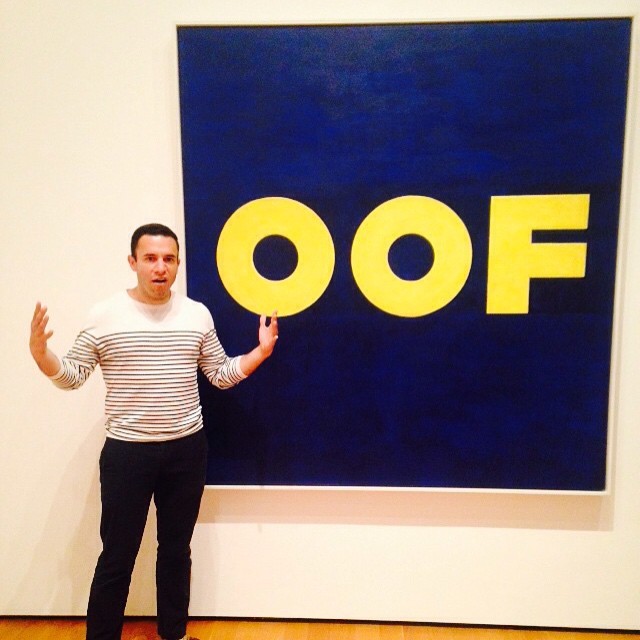
An artistic personification of ‘Dumb Shit’
The next step was to find out what this ‘motivator’ was all about. It was some sort of emotional trigger which would then seem to take over much of my rationality. How could an emotion have such a titanic grasp over an otherwise steely willpower?
To learn more about this conundrum, I tapped into my bookworm self. Over the course of a year, I picked up books on how the mind works, how we cultivate mindsets, the interplay between the mind and the various systems of the body, etc. It was one book at a time and there was no plan. I simply would listen to a podcast² or read an article, hear something from an author or expert that intrigued me and I would pull on that string to see what unwound.
Carol Dweck’s Mindset taught me about the difference between fixed (I.e. “You must be the best and nothing else”) and growth (“You become your best self over time, through curiosity and error”) mindsets and how they emerge in our current society. Kristen Neff’s Self Compassion taught me about why we treat our friends’ shortcomings with love, but treat our own with disdain. Leonard Mlodinow’s Subliminal taught me about how our minds unconsciously assemble complete ideas with incomplete information.³
All of these texts set me up for the find that would blow the lid off the great ‘Dumb Shit’ mystery: Dr. Gabor Mate’s In the Realm of Hungry Ghosts.
I picked up the text just as the summer of 2016 hit, after having listened to his interview on the Rich Roll podcast. At the time, I was chewing on the idea of whether or not I was truly an alcoholic and I was intrigued by his intelligent, physiologically-driven and yet compassionate view of substance abuse.
I went in and out of the book for about four months. It was thought-provoking and genuine, but it felt more like a good general non-fiction piece than something that would uncover some self-truths.
However, on a solo road trip around the Southwest, I finally got to his chapters on the neurological responses of the addicted mind. It was a simple explanation of how the chemicals and hormones in our brain work, what they respond to and, most importantly, how they drive us. And it just clicked.
In short (and probably in inappropriate) detail:
- Dopamine – Chemical that runs the part of your brain responsible for feelings of elation or desire. Gets you fired up. Think of it as what you feel on a Friday afternoon.
- Endorphins – Like nature’s morphine. Powerful soothers of pain, both physical and emotional. More than just a drug, of course – it influences emotions, regulates key physical processes and helps stimulate emotional bonding. When you’re happy, endorphins are dancing. Think of it as Friday night.
- What does dopamine do? – It gets you revved up about the potential acquisition of endorphins, those mighty painkillers. It keeps your eyes on the prize, just in case distraction looms. Dopamine says: GO GET WHAT WILL MAKE YOUR BODY PAIN-FREE.
- Why endorphins? – Well, duh. We hate pain. We want to feel good.
These chemicals play a vital role in regulating our emotions and decisions today, but their most critical application comes in early development, when they encourage stronger mother-child bonding. As it turns out, the quality of mother-child bonding greatly influences how well our emotional regulation systems work throughout life.
In the presence of trauma or the inadequate parent-child bonding, our ability to utilize these chemicals is damaged. Our ability to self-regulate is limited. When that happens, we’re “at greater risk for seeking chemical satisfaction from external sources later in life.”
Did I have trauma? No. But what had I been going to therapy for over the previous three years? Poor emotional regulation associated with – to put it colloquially – mom issues.
“Mother fucker,” I thought to myself, sitting at a campsite outside of Sedona. I knew this wasn’t a definitive answer, but something clicked. In those two examples I offered – frivolous shopping and withholding feelings from my ex – there were tangible fears that I could feel sitting in my body in between the logical first steps and illogical next steps. In fact, though they looked different on the surface, they were the same intrinsic fear:
I was afraid of pain. The pain of being alone.
Being alone made me feel very sad. And I would do anything not to feel it.
My body, possibly not having the appropriate biological setup to deal with this sadness, learned to deal with it externally. Spending my money and attaining someone else’s affection, in these cases.
‘Dumb Shit’ was my way of dealing with pain. As logical as the mind is, the body functions under its own definition of logic. No matter what sense your brain is making, your body says “I feel immense pain. This immense pain is putting out a bunch of fucking stress hormones that really aren’t good for the body. How do we make it go away?” That’s when I would read a story about a new restaurant or a text from my ex would pop up and my body would know the cue: “Aha! That makes us feel good. Dopamine, ahoy!”
Knowledge is power. Today, when the urge for Dumb Shit arises, I can ask myself “Wait, do you want to buy that shirt because you’re really intrigued by it? Or are you just in pain?”, realize what the truth is and take the action my heart truly desires.
The groundwork for understanding the bodily response to “Why do I do Dumb Shit?” had been laid. Understanding the underlying emotions and how they formed in the first place would take me down deeper levels of vulnerability.
– – –
¹At the time, the sentiment was more like “She’s keeping me close.” I had yet to realize my own culpability in such matters. Today, it’s more like “this is much my decision as it is hers.”
²The Rich Roll Podcast, The One You Feed, On Being with Krista Tippett and Finding Mastery with Michael Gervais have all been seminal on this journey. Definitely worth checking out if you’re interested in topics around health, mindfulness, emotions and overall well-being.
³By the way, these books are easily accessible and, most importantly, they are curious explorations rather than self-help. I wanted to avoid self-help books because I feel they can be too focused on promoting their own limited agendas rather than an objective exploration.
 The Swearing Seeker
Awesome read brother. My favorite thus far. I was able to connect with you in retrospect to dapamine and new restaurants. I find myself excited on Wednesdays thinking about Friday night Tai food with Gaby. it usually leads to bad decisions of spending after. Thanks for pointing out the flaws of taking my wife out. I’ll stop it immediately. Rofl…
LikeLike